
‘What do you want to be when you grow up?’
If you engage in a conversation with me, a version of this question will inevitably surface. And I am willing to bet that you will have an answer – one that will likely not match your current career. The good news is that you aren’t the only one. As someone who spends a disproportionate amount of time thinking about the future of work, I’ve watched the answers to this question evolve in a way I wouldn’t have predicted. While almost everyone growing up alongside me wanted to jump straight into the high-paying, perk-stuffed, glittery tech sector, the current generation is choosing to look elsewhere. No, they’re not all aspiring to be social media influencers but instead, the answer may surprise you too. But before I give you the answer, let’s spend some time talking about why the answer is no longer tech.
A recent New York Times article declared that we are now firmly in the “hard tech era.” Gone are the days of kombucha taps, sushi bars, free dry-cleaning and rainbow-colored bean bags. The tech industry’s headlines have shifted dramatically from workplace perks to mass layoffs, burnout epidemics, top-down mandates, controversial leadership decisions, and eras of efficiency. Employees who once proudly wore company hoodies are now leading protests against their employers’ AI initiatives, only to face termination. What was once fun work is now just hard work. The pressure to win the AI-race has dimmed the glow the big tech firms once had and there is no denying that tech firms are no longer as aspirational as they once were. While technology still dominates global conversations, particularly around AI and its variations, there’s a growing distinction between acknowledging tech’s importance and wanting to work in the industry itself.
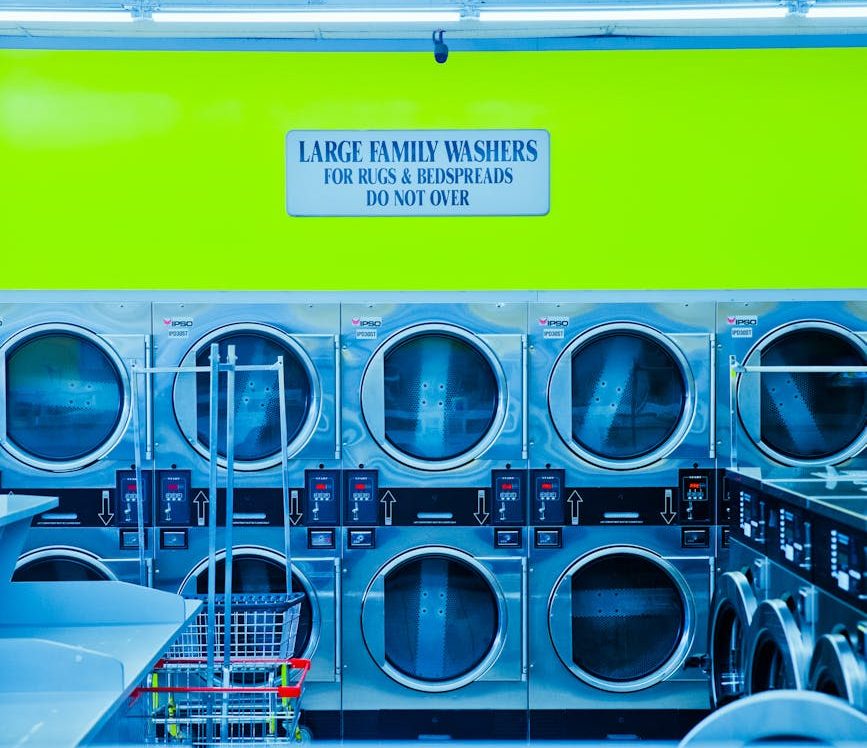
So where are today’s ambitious professionals heading? Increasingly toward entrepreneurship – specifically, traditional businesses like laundromats, vending machines, self-storage units, funeral homes, and car washes. Millennials and GenZ are trading corporate titles for ownership of what were previously considered ‘boring’ businesses. Here’s why these low-effort, high-cash flow ventures are gaining traction:
- Strong Cash Flow: These “boring businesses” offer low overheads and predictable income post-setup. A laundromat might cost $200K-$500K initially but can generate $15K-$40K monthly, with 20-35% profit margins. Buying existing operations often provides even better economics.
- Recession Resistant: Essential services endure economic downturns – people always need clean clothes, storage space, and snacks. AI won’t fix your plumbing or replace electricians anytime soon. These businesses remain relevant regardless of technological advances, and you rarely hear about a laundromat being called “evil” unlike today’s tech giants.
- Accessible Skills: While everyone is upskilling to stay competitive, these businesses require operational savvy rather than technical expertise. The skills needed are more accessible and less expensive to acquire than machine learning or AI development knowledge.
- Semi-Passive Operation: Modern automation, software, and outsourced labor enable many of these businesses to run themselves. This allows for expansion or side-venture management. I’ve watched colleagues become real estate investors and storage unit owners, building strong passive income streams.
- Market Opportunity: With baby boomer business owners retiring en masse, opportunities abound. According to Gusto’s analysis of 400,000 payrolls, the share of small businesses employing owners’ young adult children has doubled since 2018. Even more telling, 42% of small-business owners surveyed by Barlow Research in 2024 plan to transition ownership within five years.
- Innovation Potential: These traditional businesses are ripe for reinvention. Recently, I watched GenZers transform a laundromat into a nightclub after hours – proving that “boring” businesses can become exciting with fresh perspectives.
The rise of financial influencers has highlighted how these businesses perfectly align with the FIRE (Financial Independence, Retire Early) movement, fueling even more interest. For those of us in tech, this forces us to confront an uncomfortable question: “Why should talent choose tech?” The traditional answers –cutting-edge work, high pay, or working with the “smartest people” – aren’t enough anymore. There are multiple paths to innovation, and the tech route with its burnout, job insecurity, diminishing perks, and fierce competition has lost its shine. When entrepreneurs can generate similar or better income through traditional businesses while maintaining better work-life balance, tech’s value proposition weakens.
I know I’ll hear pushback – “Tech is still the highest-paying job,” “Tech will change the future,” and similar arguments. True, the industry won’t disappear, but it might not attract the same caliber of talent it once did. While forecasters have long predicted a tech bubble that hasn’t yet materialized, there is definitely a shift, a gradual redistribution of talent across various sectors. As the CEO of Duolingo aptly put it, “Because of technology, math nerds were the richest people in the world. And likely because of AI, math nerds are not that valuable anymore.”
The rising interest in traditional businesses signals a broader shift in how we view success and innovation. Sometimes, the most revolutionary move isn’t developing the next big app, establishing the next tech unicorn or enabling big tech. It’s making traditional business models work better for the modern era. As more professionals discover the appeal of these “boring” businesses, we might need to reconsider what we mean by innovation and success in the modern economy and, if in tech, how we manoeuvre this shift, if at all.


