
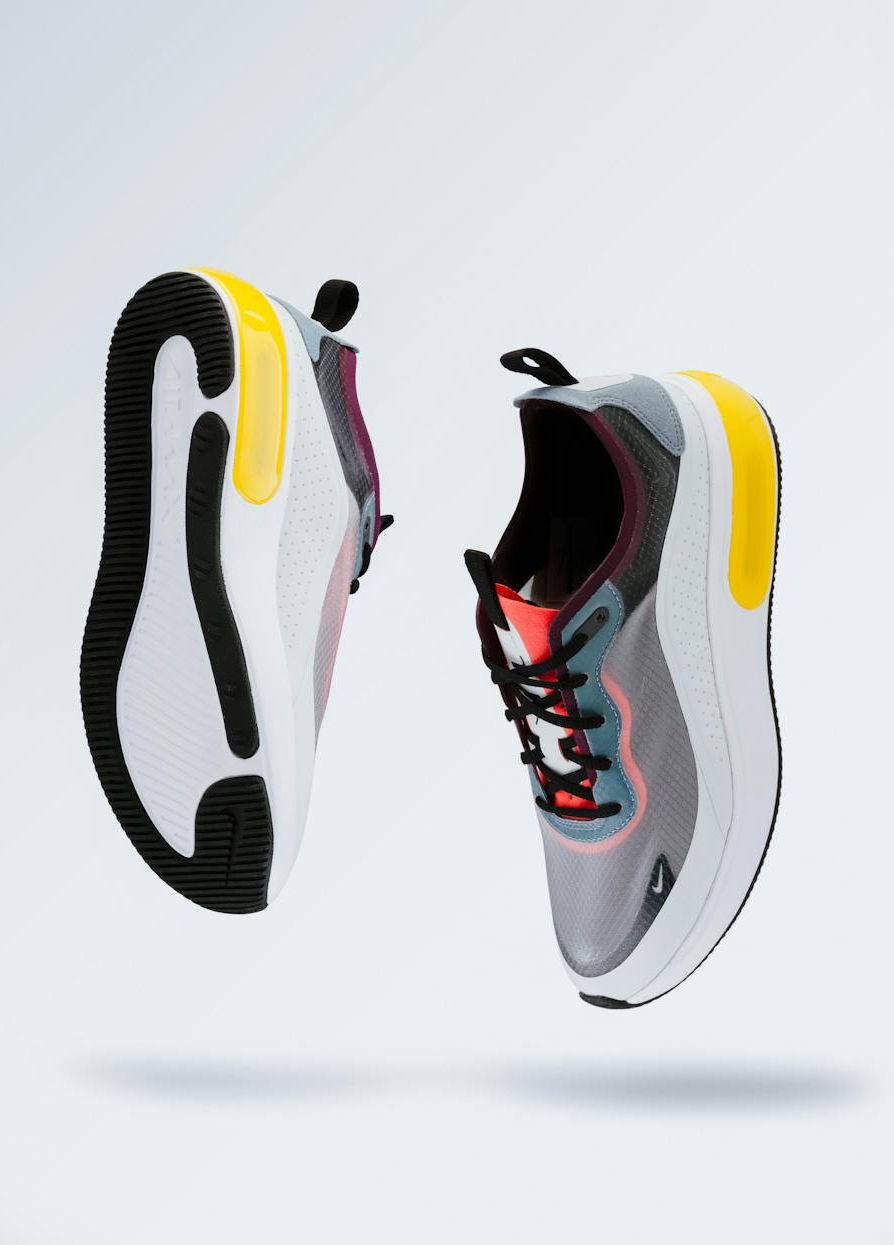
On’s Cloudboom Strike LS is creating history at the Paris Olympics. Their groundbreaking spray on shoes are a glimpse into the future; a future of individualization. The concept, however, is not new. Once upon a time, long before mass production, tailored clothes and bespoke footwear were the norm. Trusted tailors and cobblers would meticulously measure a person’s dimensions and then craft clothing or shoes to fit them and no one else. But as economies of scale led to the rise of mass manufacturing, this individualized approach gave way to standardized, one-size-fits-all products. Today, the mass production industry provides endless options, yet the trend is to fit people into the clothes, rather than the other way around. Tailor-made apparel has become a luxury, not the common practice.
Of course, no one enjoys the feeling of walking into a room wearing the exact same clothes and shoes as everyone else. As mass production started to feel a bit too cookie-cutter, brands responded by introducing customization options. You could now take a manufactured product, like shoes for example, and make them your own by selecting from a variety of pre-designed stickers and add-ons. This allowed your shoes to be called “unique” since the odds of someone else choosing the same set of stickers were low. However, the core design and fit of the shoes were still not truly unique.
Then came the era of personalization. Consumers could now add their own initials or signature onto products, ensuring the item was uniquely theirs. With On’s spray-on sneakers, we’ve come full circle, inching closer back to the holy grail of true individualization.
You may be wondering why I’m discussing the apparel industry on a work-focused blog. Well, the reality is, the world of work is not all that different from the evolution we’ve seen in the clothing and footwear space. Much like in the apparel industry, there was a time long ago when humans were able to take on tasks that most suited their unique interests and skill sets. Unfortunately, I don’t have firsthand knowledge of that era, as I was born much later. But I’d like to believe it was a fairly satisfying way of working. What I can speak to with confidence is the state of the modern workplace that I observe around me today.
Today, we find ourselves squarely in the middle of the customization and personalization era of work. There are thousands of job descriptions available, from which you select one that suits your skills and interests. You then prove you can handle the prescribed duties and if accepted, conform to the job, the organization, and the set of responsibilities. Sure, you can add your own personal flair to the tasks and go above and beyond through side projects and experiments. But you can’t afford to stray too far from the job description, even if it doesn’t fully play to your strengths. You’re paid within a predetermined salary range for the role, and as much as you’d like to believe the position was uniquely crafted for you, the reality is there are likely several others who can do what you do. So, in the end, it’s like taking a mass-produced shoe, adding your own stickers and coloring it to make it feel more personalized. But it’s definitely not a shoe that was designed from the ground up to perfectly fit and support your unique feet.
There are some outliers who have carved out their own unique niches through entrepreneurship or by building a diverse career portfolio. Yet, by and large, organizations do not invest in creating roles that are uniquely crafted for individual employees. If the best way to get the most out of an employee is to play to their inherent strengths, and the optimal way to do that is by designing roles around their unique abilities, then why haven’t we ventured into an era of truly individualized jobs? Here are three key reasons why this shift has not occurred:
- It’s Messy: Imagine the immense resources required to first understand the unique strengths of each individual employee, then craft a role that plays to those strengths, determine the appropriate compensation, and ensure the organization has the right mix of these customized positions to get all the necessary work done. It’s a recipe for organizational anarchy. The complexity is so wild that anyone I’ve spoken to about it has quickly and deftly changed the subject to a more easily imaginable realm.
- It’s Expensive: Even if we were willing to tackle the messiness, the sheer resources in terms of time and effort required to navigate such a transformative change would amount to a massive financial cost. A cost that our current world is likely not yet ready to accept. In an age of increasing efficiency and cost-cutting, pursuing this path would put us directly in the crosshairs of all other ongoing optimization efforts.
- It’s Never Been Done This Way: The first five people I discussed this concept with found it virtually impossible to imagine a workplace structured in this manner. In today’s standard model, you typically go out searching for a specific type of professional, like a “marketing ninja.” You don’t often meet someone exceptional and then craft a role around their unique abilities (with rare exceptions). And as the saying goes, you can’t achieve what you can’t first imagine.
At this point, you’re likely expecting me to provide some answers on how we can actually transition from the current state to the ideal world of individualized jobs. If I say I don’t have an answer, I may risk upsetting many readers. So, I’ll take a stab at outlining a potential path forward. And it all begins with “the’s”:
The ratio: Today, the core structure of jobs is rather rigid. Depending on the role, the ratio of personalization and customization varies between 0-30%. You can consider yourself lucky if you have the flexibility to independently determine how to design more than 30% of your job. More often than not, you are surrounded by others who have strong opinions on what you should be achieving over time, and you are rewarded based on those parameters. What if we flipped this dynamic on its head? Imagine a scenario where these external stakeholders only controlled 50% of your goals, while the remaining 50% were self-determined, potentially even unrelated to your official job description. This could resemble something akin to Google’s legendary “20% time,” but extended to perhaps 2 out of 5 workdays per week. And we could gradually inch that percentage up to 50. Now, before you get too excited, perhaps start with a small pilot program, targeting a cohort of new college hires (despite your instincts to go with those more senior). Those just entering the workforce are still in the process of discovering their interests and skills, and may be more open to experimentation than those who have been in the same profession for 20 years and thus the best candidates for a breakthrough change.
The technology: Just as technology has been a driving force behind the evolution in the apparel industry, it will likely play a significant role in catalyzing a shift towards more individualized work. As various technologies automate and learn parts of our jobs, we will be forced – out of necessity or even fear – to spread our wings and explore different dimensions of our work that we haven’t yet experienced. For some, this may mean pursuing an entirely new career path, while for others, it could involve creating a whole other professional identity within the same organization.
The extent of imagination Lastly, the roles we create within organizations in the future will be restricted only by the extent of our collective imagination and our willingness to venture into uncharted territory. Too often, people consider shifts that merely exist within a 10-degree radius of their current position. Yet the truly momentous transformations happen when we challenge ourselves to go beyond these adjacent possibilities and deviate by 90 degrees or more.
So if you take only one thing away from this discussion, let it be this – push your imagination beyond its current confines. Envision a world where organizations design roles around the unique capabilities of each individual, rather than trying to fit individuals into pre-defined positions. Once you’ve imagined this future state, I’d love for you to leave a comment below describing what that world looks like and how it makes you feel. Forget about what’s deemed possible within the realm of today’s reality. Only by first imagining the ideal can we then strive to bring it to life.
And before you go, tell me – would you try On’s Cloudboom Strike LS?

 The HR Business Partner Story